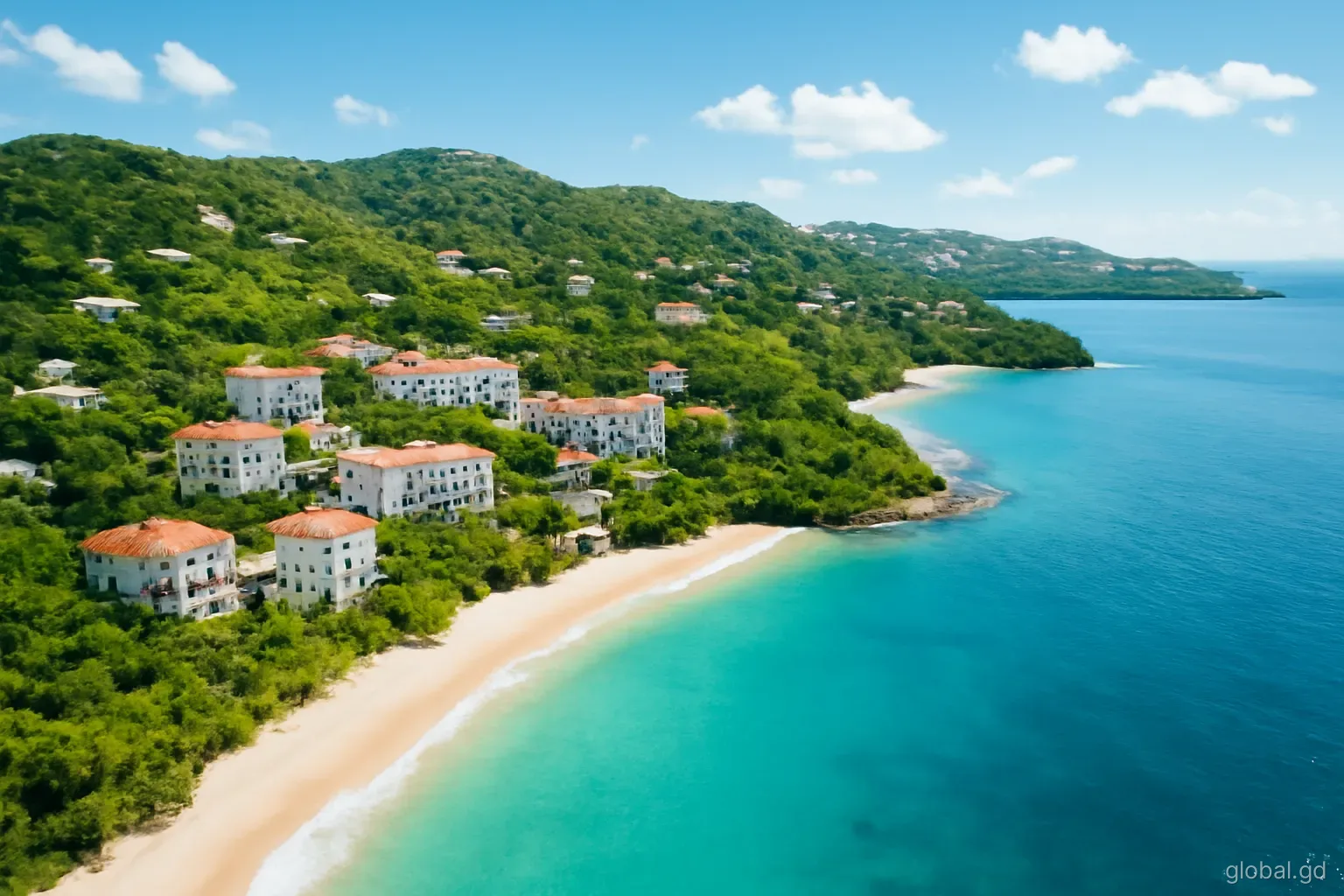
For a remote worker, choosing where to live in Grenada is mostly a trade-off between connectivity and convenience on one side and space, quiet and price on the other. The south-west corner of the island, from St George's through Grand Anse to True Blue and Lance aux Epines, concentrates fibre broadband, supermarkets, restaurants and the airport within a short drive. Beyond it, rents can fall and views can improve, but each step away adds driving time and connection risk.
This guide compares the main areas from a working point of view rather than a holiday one. Rents, availability and the quality of individual buildings vary so widely that no area is uniformly good or bad, so treat these as starting points and test the specific property before signing.
Grand Anse and Morne Rouge
Why people choose it. Grand Anse is the commercial centre of the south: the long beach, shopping centres including Spice Island Mall, supermarkets, banks, pharmacies, gyms and a wide choice of restaurants. Morne Rouge, just over the hill, is quieter with its own small bay. Both are minutes from the airport and well within fibre coverage in most streets.
Getting around. Route buses run frequently along the main road between Grand Anse and St George's, so it is possible to live here without a car if you choose your street carefully.
Trade-offs. This is the most tourist-oriented part of Grenada. Rents in high season, roughly December to April, reflect it, and short-term rentals compete with long-term ones. Traffic on the main road can be slow at rush hour and on cruise-ship days.
True Blue, Calliste and Lance aux Epines
Why people choose it. The peninsulas south of the airport are residential and comparatively quiet, popular with long-stay foreigners and with students and staff connected to St George's University at True Blue. Lance aux Epines is a leafy area of larger homes along the water, close to Prickly Bay and its marina community.
Working life. Fibre is widely available, and the marina areas have cafés and services used by sailors and remote workers alike. The airport is close, which suits anyone travelling frequently.
Who lives there. The mix of long-stay foreigners, sailors, students and Grenadian families makes it easy to meet people with similar routines, and informal networks often share news of rentals, services and coworking spaces before anything is advertised.
Trade-offs. Rental demand tied to the university semester calendar affects availability. Buses are less frequent on the side roads, so a car or regular taxi is useful, and aircraft noise affects parts of the area nearest the runway.
St George's and its hillsides
The capital has the island's government offices, the main market, banks, the Carenage waterfront and a historic townscape of red tiled roofs climbing steep hills. Living in or just above town gives you a real Grenadian neighbourhood rather than a resort strip, and many homes have views across the harbour or the lagoon.
For work, connectivity in town is generally good, and you are close to every administrative office you might need for immigration extensions or other paperwork. Route buses radiate from the bus terminal to every part of the island, so it is the best-connected base for anyone without a car who wants to explore.
The trade-offs are physical and acoustic. Streets are steep and narrow, parking is scarce, and a hillside apartment can be a stiff walk from the nearest shop. Town is lively on weekdays and around events, and some streets carry traffic and music late into the evening. Choose a quieter hillside location such as one of the residential areas above the town if you value calm for calls.
St David's, Westerhall and the south-east
East of Lance aux Epines, the coast breaks into a series of bays and headlands: Westerhall Point, La Sagesse, the areas around St David's. Homes here often have more land, more privacy and Atlantic breezes, and long-term rents can be lower than on the busiest parts of the south-west coast for comparable space.
Connectivity is the question to check property by property. Some developments and roads have fibre; others rely on wireless links or mobile data. Ask specifically, test upload speed and check both mobile networks at the desk you will use.
A car is close to essential. The drive to Grand Anse for supermarkets, banking or meeting people typically takes twenty minutes to an hour depending on location and traffic. In exchange, the area suits remote workers who want quiet mornings, a garden and the sound of the sea rather than traffic, and who are comfortable organising their week around fewer trips to town.
Further afield: Grenville, the west coast and Carriacou
Some remote workers choose to live outside the south for cost, culture or quiet. Each option has particular considerations.
- Grenville and St Andrew's: Grenada's second town, on the Atlantic coast, has markets, banks and a strongly local feel. Rents can be lower, but connectivity varies and the drive across or around the island to the airport is long.
- Gouyave, Victoria and the west coast: fishing towns along the Caribbean side, with sunsets and a slower pace. Check fibre availability carefully, and be prepared for a winding coastal drive to St George's.
- Grand Etang and the interior: cooler and greener, with frequent rain and mist. Mobile coverage can be patchy in valleys, so these areas suit only those with a confirmed fixed connection.
- Carriacou: a smaller, slower island with its own considerations, still recovering from Hurricane Beryl in July 2024. Check internet, water and power arrangements in detail before committing.
What to check in any rental, wherever it is
Beyond location, a handful of property details decide whether a home works for remote work in the tropics.
- Air conditioning in the room where you work, not just the bedroom, and how the electricity is billed: in your name, included in the rent, or recharged by the landlord.
- Water supply and storage. Many homes have a cistern or tank and pump in addition to the NAWASA mains, which matters during supply interruptions, especially in the drier months.
- Security. Burglar bars, lockable doors and windows, outside lighting and whether neighbours are close are worth asking about, particularly in isolated homes.
- A proper desk and chair. Holiday rentals are often furnished for lounging. A dining table at the wrong height becomes painful within a week.
- Insect screens. Mosquitoes are most active at dawn and dusk, the same hours as many early or late calls.
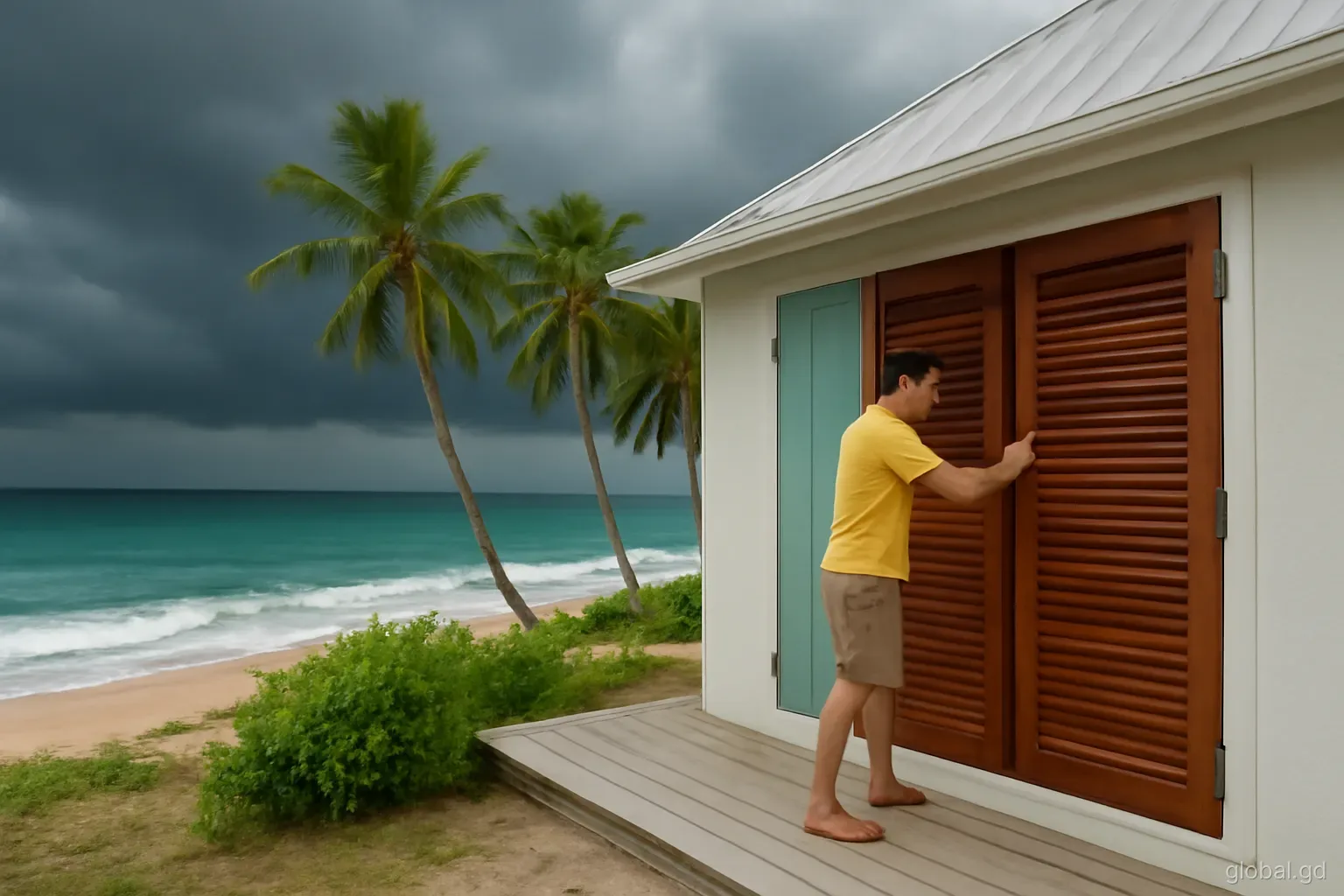
- Hurricane arrangements. For stays between June and November, ask about shutters, the landlord's storm plan and the nearest shelter.
Choosing mistakes to avoid
Renting for the view, not the desk. A spectacular hilltop can mean weak signal, a long walk to a bus and a steep drive. Test where you will actually sit.
Underestimating driving. Distances look short on paper, but hill roads and traffic stretch travel times. Drive the commute at the hour you would make it.
Ignoring noise. Roosters, dogs, church services, bars and aircraft are all part of the soundscape. Visit at different times of day before signing a long lease.
Forgetting the season. A home that is breezy and dry in February can be hot and humid in September. Ask about cooling and storm arrangements for the months you will actually be there.
Choosing by price alone. A lower rent far from shops and services can cost more once taxi fares, car hire and time are counted. Add transport to the monthly budget before comparing.
Skipping the neighbourhood walk. Walk the area at night as well as by day. Lighting, dogs, the route to the nearest shop and how busy the road is all look different after dark.
Committing for a year straight away. A month somewhere central, then a longer lease in the area you have come to prefer, avoids being locked into the wrong neighbourhood.
Frequently asked questions
Where do most remote workers live in Grenada?
Most base themselves in the south-west, between St George's, Grand Anse, True Blue and Lance aux Epines, where fibre broadband, supermarkets, restaurants and the airport are close together. Quieter areas further east and north suit those willing to drive more.
Can you live in Grenada without a car?
Yes, in parts of Grand Anse and St George's served by frequent route buses, with taxis for the rest. In True Blue, Lance aux Epines and further afield, buses are less frequent and a car makes daily life much easier.
Is Grand Anse a good base for working remotely?
For most remote workers, yes. It has wide fibre coverage, cafés, shops and frequent buses to St George's. The trade-offs are higher rents in the winter season, more tourist traffic and competition from holiday rentals for apartments.
How far is the airport from the main residential areas?
Maurice Bishop International Airport sits on Point Salines at the south-western tip, roughly ten to twenty minutes by road from Grand Anse, True Blue and Lance aux Epines, and longer from St George's in traffic. Eastern and northern areas are considerably further.
When is the best time to look for a long-term rental?
Availability is usually better outside the winter tourist season, which runs roughly December to April, and away from the start of university semesters. Booking a month somewhere central and searching in person often finds better options than listings alone.