Grenada produces only a small fraction of the world's cocoa, but buyers who care about flavour know the name. The island grows mainly Trinitario cocoa, prized for its complex aroma, and it is one of a limited group of origins recognised by the International Cocoa Organization as producing fine or flavour cocoa. That status underpins a trade built on quality rather than volume.
This article explains how Grenadian cocoa moves from farm to foreign buyer, how bean-to-bar chocolate made on the island has changed the picture, and what challenges growers and exporters face. Market arrangements and figures change, so check current details with the Grenada Cocoa Association, the Ministry of Agriculture and individual exporters before making commercial decisions.
From pod to dried bean
Cocoa grows on smallholdings and estates across the island, with St Andrew's, St Patrick's, St John's and St Mark's among the important growing areas. Pods are harvested by hand, cut open, and the wet beans, surrounded by sweet white pulp, are taken for fermentation. Fermentation in wooden boxes over several days develops the flavour precursors that later become chocolate flavour. Poor fermentation produces flat, astringent beans, however good the variety.
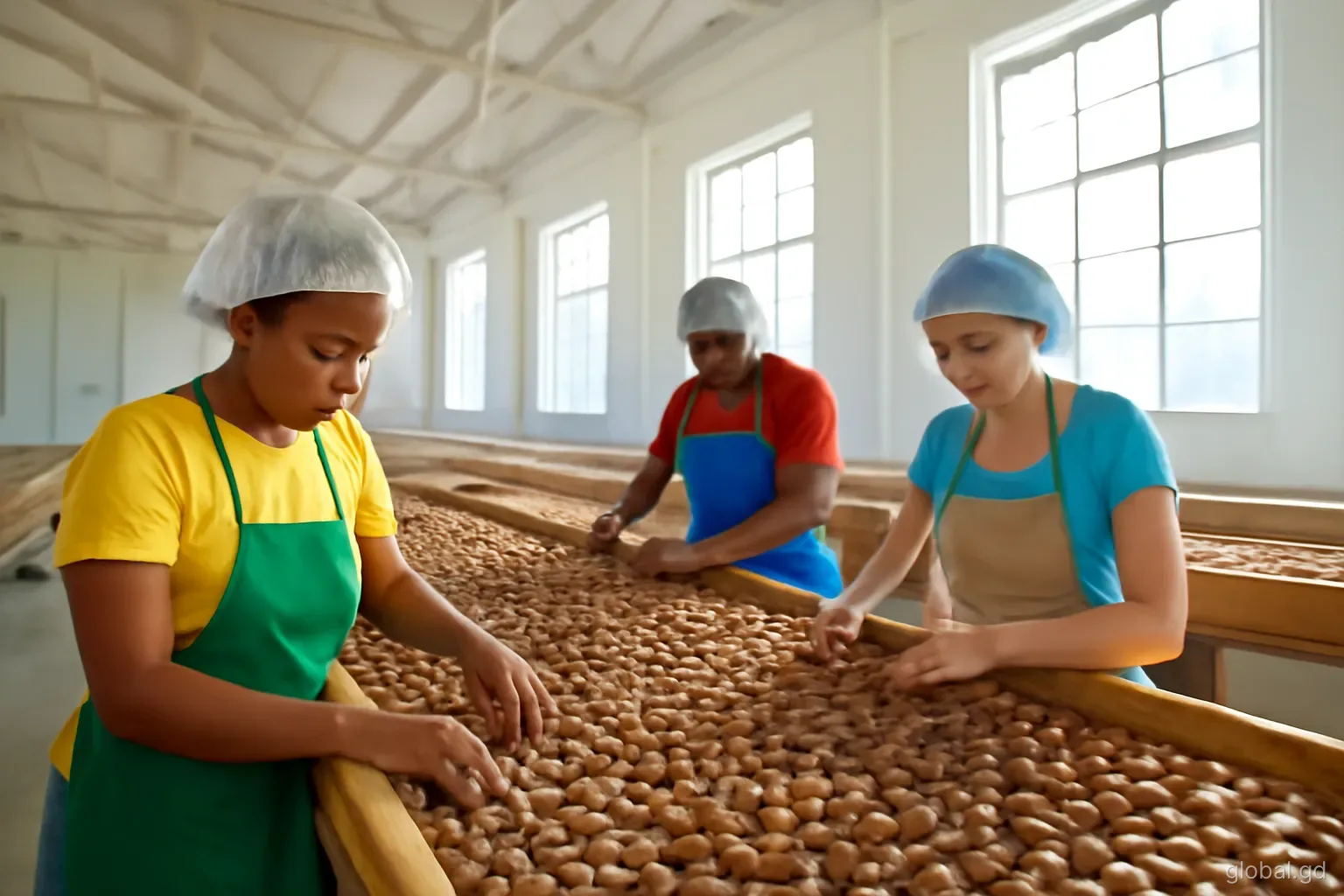
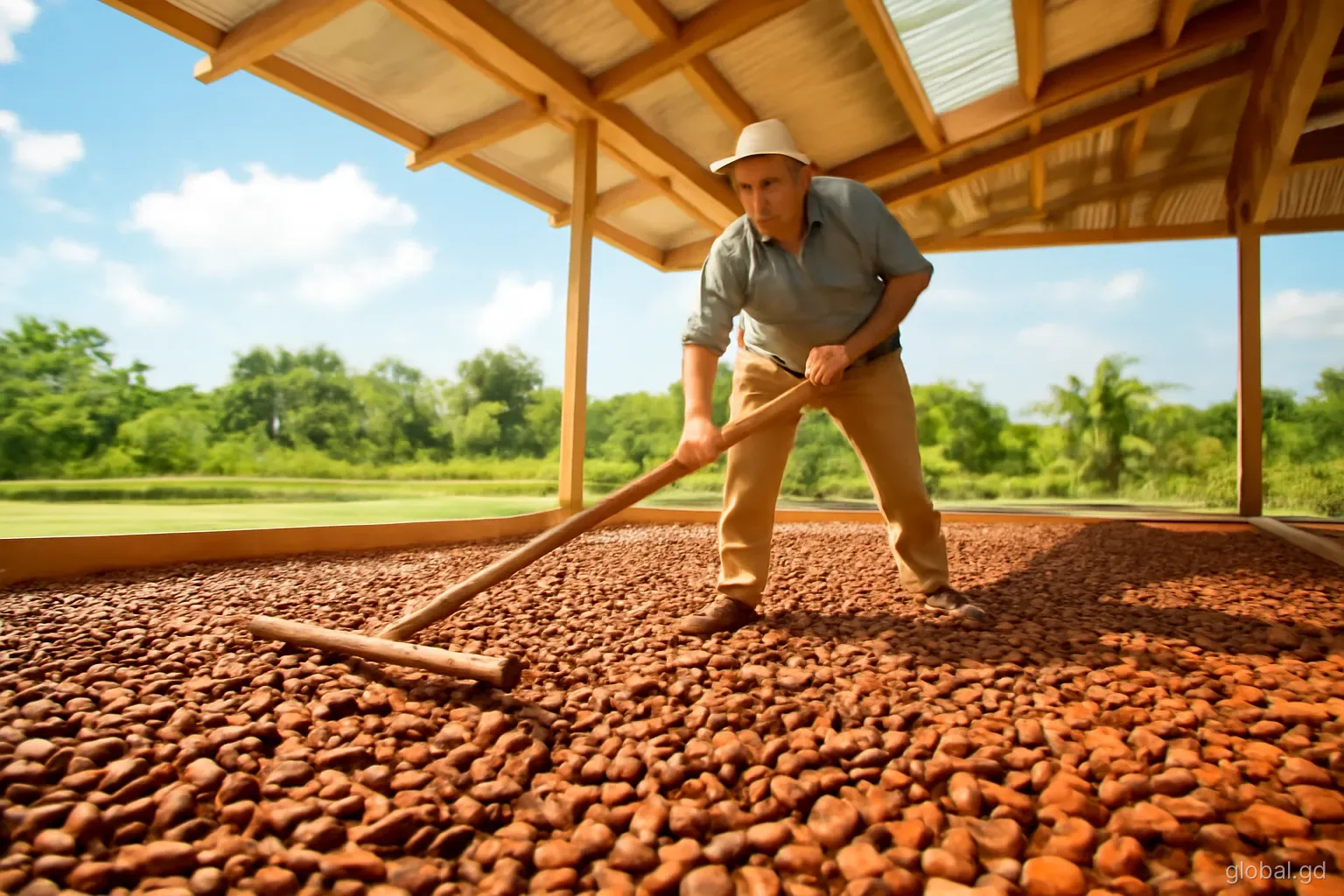
After fermentation, the beans are dried, traditionally in the sun on large wooden trays or floors with sliding roofs that can be rolled over the beans when rain threatens. Workers turn the beans by raking or walking through them. Drying reduces moisture to a level that allows safe storage and shipping.
The quality of fermentation and drying, more than anything else, determines the price a buyer will pay. Many smallholders sell wet beans to estates or central fermentaries that handle these steps with more consistency than individual farms can manage.
Once dry, beans are cleaned, sorted to remove flat, broken, mouldy or slaty beans, and bagged in jute or similar sacks for storage and shipment. Storage needs to be dry and well ventilated, because beans reabsorb moisture in Grenada's humid air and can develop mould. Exporters usually keep samples from each lot so that a buyer's quality complaint can be checked against what was actually shipped.
How the export trade is organised
The Grenada Cocoa Association. Historically, the Grenada Cocoa Association played a central role in buying, processing and exporting cocoa beans, buying from farmers and selling to overseas buyers. The structure of the trade has become more diverse over time.
Estates and private exporters. Some estates and businesses ferment, dry and export their own beans or supply local chocolate makers. Exporters need to comply with licensing and quality requirements set by the authorities.
Bean-to-bar makers. A number of Grenadian companies make chocolate on the island from local beans, from fermentation through to finished bars, keeping more of the value at home.
Buyers abroad. Specialty chocolate makers in Europe, North America and elsewhere buy fine flavour beans in small lots, often paying premiums for traceability and consistent quality.
Check the rules. Licensing, grading and export arrangements for cocoa can change. Anyone planning to buy or export should confirm current requirements with the Ministry of Agriculture and the Grenada Cocoa Association.
The bean-to-bar story
The idea that chocolate could be made where the cocoa grows, rather than in Europe or North America, gained real momentum in Grenada with the Grenada Chocolate Company, founded in the late 1990s in Hermitage, St Patrick's. Its organic, tree-to-bar chocolate attracted international attention, and the company became known for shipping chocolate to Europe by sailing ship, a symbol of its low-carbon approach.
Belmont Estate in St Patrick's, a long-established estate open to visitors, also processes cocoa and makes chocolate, combining production with agritourism. Other makers have followed, and Grenada now has a recognisable chocolate scene, with bars sold in local supermarkets, at the airport and to specialty retailers abroad.
Making chocolate in the tropics brings challenges: high humidity and heat complicate tempering, storage and shipping, and packaging materials often have to be imported. Yet the model captures far more value than exporting raw beans, creates skilled jobs and builds Grenada's brand. It has also inspired cocoa-growing countries elsewhere to consider similar approaches.
Quality premiums and what buyers pay for
Fine flavour cocoa sells at a premium over bulk cocoa, but the premium is not automatic. Specialty chocolate makers buy on flavour, and they typically ask for samples from each lot, which they roast and taste before agreeing a price. Beans with off-flavours from poor fermentation, smoke from drying over fires, or mould from inadequate drying are rejected or discounted, whatever their origin.
Consistency across lots and across years matters as much as a single excellent sample. A maker who builds a single-origin Grenada bar around a particular flavour profile needs to know the next shipment will taste similar. Producers who keep fermentation records, control drying carefully and sort out defective beans build long relationships with buyers.
Certification can add value in some markets. Organic certification, for example, opens doors with certain buyers but involves inspection costs and restrictions on inputs. Traceability, the ability to say which farms a lot came from, increasingly matters to buyers who tell their customers the story behind the bar. Each of these adds cost, so producers should weigh the premium they expect against the expense and effort involved.
Challenges facing Grenadian cocoa
Despite its reputation, the sector faces persistent pressures:
- Ageing trees and farmers. Many cocoa trees are old and less productive, and many farmers are elderly, with fewer young people entering agriculture.
- Labour costs and availability. Harvesting, fermenting and drying are labour-intensive, and labour is costly compared with large producing countries.
- Praedial larceny. Theft of crops from farms is a long-standing problem in Grenada and discourages investment.
- Disease and pests. Fungal diseases and pests reduce yields if farms are not well managed.
- Hurricanes. Storms damage trees and shade cover, as Hurricane Ivan did in 2004.
- Small volumes. Limited supply restricts the number of buyers Grenada can serve and makes consistency harder to guarantee.
- Price volatility. World cocoa prices swing sharply. Fine flavour premiums offer some protection, but not complete insulation.
Breaking into cocoa or chocolate exports
For a farmer, processor or investor considering the sector, a sensible sequence is:
- Learn the current structure of the trade by speaking with the Grenada Cocoa Association, the Ministry of Agriculture and established exporters.
- Assess supply: your own farm, purchases from neighbours or contracts with estates, and the consistency you can achieve.
- Invest in fermentation and drying quality, since this determines price more than any other factor.
- Identify target buyers, such as specialty chocolate makers, and request their quality requirements and sample procedures.
- Arrange laboratory testing for contaminants, moisture and quality, and secure phytosanitary certification for exports.
- Understand market access rules in destination countries, including food safety and labelling requirements for finished chocolate.
- Plan logistics carefully, especially for chocolate, which needs temperature control to avoid blooming or melting in transit.
Chocolate tourism and the home market
Cocoa is increasingly part of Grenada's tourism offer. Estate tours, chocolate-making workshops and tastings attract visitors interested in where their food comes from, and the Grenada Chocolate Festival, held in recent years, has brought together makers, farmers and visitors for events across the island. Check whether it is running and when before planning a trip around it.
Cocoa tea, made from locally rolled balls of ground cocoa and spices, remains a breakfast staple in many Grenadian homes, and cocoa balls are sold in markets around the island. This domestic market gives small processors a local outlet alongside exports.
For producers, tourism and local sales offer higher margins and direct customer feedback, while exports provide volume and international recognition. The most resilient businesses combine both. Anyone considering an investment should take advice from the Grenada Investment Development Corporation and a licensed professional on incentives, licensing and land.
Frequently asked questions
What kind of cocoa does Grenada grow?
Grenada grows mainly Trinitario cocoa, a hybrid known for its aromatic, complex flavour. The International Cocoa Organization recognises Grenada as a producer of fine or flavour cocoa, a category that commands higher prices than bulk cocoa used for mass-market chocolate.
Who exports Grenada's cocoa?
Historically, the Grenada Cocoa Association has played a central role in buying and exporting beans. Estates, private exporters and local chocolate makers are also involved. Export arrangements and licensing can change, so check the current position with the Ministry of Agriculture.
What is bean-to-bar chocolate in Grenada?
It refers to chocolate made on the island from locally grown cocoa, with fermentation, drying, roasting and bar-making all taking place in Grenada. Makers such as the Grenada Chocolate Company and Belmont Estate keep more of the value at home than exporting raw beans.
Why does fermentation matter so much?
Fermentation develops the flavour precursors that become chocolate flavour during roasting. Well-fermented beans produce rich, complex chocolate, while poorly fermented beans taste flat or astringent. Buyers of fine flavour cocoa pay close attention to fermentation and drying quality.
Can visitors tour cocoa estates in Grenada?
Yes. Several estates, including Belmont Estate in St Patrick's, offer tours explaining cocoa growing and processing, often with tastings. Opening days and tour arrangements vary, so check directly with the estate or a tour operator before visiting.