The Atlantic hurricane season runs from 1 June to 30 November, and for years Grenada was described as lying "below the hurricane belt". Hurricane Ivan in September 2004 ended that complacency, causing devastation across the main island, and Hurricane Emily struck the following year. In July 2024, Hurricane Beryl made landfall on Carriacou as a major hurricane, destroying or damaging most buildings there and on Petite Martinique, with serious damage on the north of the main island too.
For remote workers, the season is not a reason to avoid Grenada, but it changes how you plan. Most days from June to November are ordinary, with heat and showers. The risk is concentrated in a small number of events that can cut power, internet and roads for days, or much longer. This guide covers how to prepare your work, your home and your exit options.
What the season actually looks like
Grenada's wetter months broadly coincide with the hurricane season. Expect more frequent and heavier showers, higher humidity and occasional tropical waves that bring a day or two of squalls. These cause short power interruptions, flooded roads in low-lying areas and landslips on hillsides, but rarely anything worse.
Storms and hurricanes are the exception. The peak of the Atlantic season is usually August to October, but Beryl showed that a powerful storm can form early, and forecasters have noted that warmer seas allow rapid intensification. Systems approaching from the east can strengthen quickly, giving less warning than people expect.
Official information comes from the Grenada Meteorological Service and the National Disaster Management Agency (NaDMA), which issues watches, warnings and guidance on shelters. Regional forecasts from the US National Hurricane Center are widely followed. A watch means conditions are possible within the coming days; a warning means they are expected. Follow official channels rather than social media rumours, which multiply ahead of every system.
Before the season: choosing and preparing your base
Ask about the building. Concrete construction, a well-secured roof, storm shutters and a position away from low-lying flood zones and exposed ridges all matter. Ask landlords how the property fared in past storms and what their plan is.
Know your shelter. NaDMA designates emergency shelters, often schools and community buildings. Find the one nearest your home before you need it.
Check water and power backup. A cistern, a stored supply of drinking water and, ideally, a generator or solar battery system make a big difference after a storm.
Read your insurance. Travel insurance may exclude events that were forecast when the policy was bought, and may not cover trips extended after a storm is named. Health cover should include evacuation.
Talk to your employer. Agree in advance what happens if you are offline for days: who covers your work, how you will check in, and whether you can take leave or relocate temporarily.
A remote worker's storm kit
The standard household kit covers food, water, medicines and torches. Remote workers should add items that protect their work and devices.
- Fully charged power banks, enough to keep a phone running for several days, and a way to recharge them, such as a solar charger or car adapter.
- Waterproof bags or containers for laptops, hard drives, passports and documents.
- SIM cards from both Digicel and Flow, since one network may recover before the other.
- Offline copies of essential work files, contact lists and passwords stored securely, in case cloud access is lost.
- Cash in EC dollars, because card machines and ATMs may not work without power or connectivity.
- A battery-powered or wind-up radio for official announcements when the internet is down.
- Printed key contacts, including your employer, embassy or consulate, landlord and insurer.
- A basic first-aid kit and enough of any prescription medicines for at least two weeks, since pharmacies may close or run short after a storm.
- Sturdy shoes and work gloves for clearing debris safely once the storm has passed.
When a storm is forecast
Once a system is forecast to affect Grenada, a clear sequence avoids last-minute scrambles.
- Tell your team and clients early, giving your expected availability and the fallback channel you will use.
- Decide promptly whether to stay or leave. Flights fill quickly and airports close well before a storm arrives.
- If staying, finish urgent work, upload or back up files and charge every device and power bank.
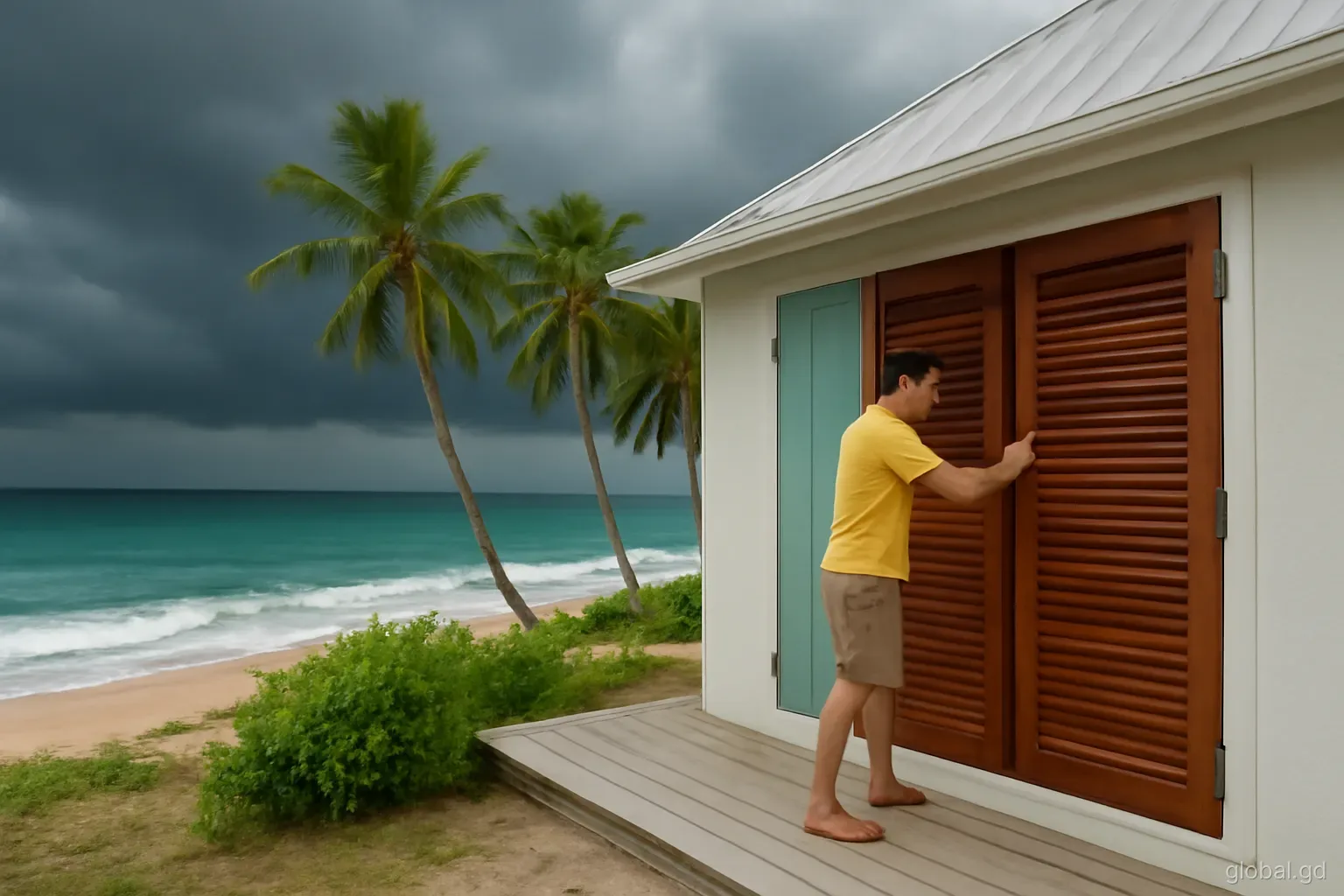
- Secure the home: close shutters, bring in outdoor furniture and move equipment away from windows.
- Fill containers with water and check food, medicines and torches.
- Follow NaDMA and Met Service updates, and move to a shelter if advised or if your building is unsafe.
- After the storm, stay off damaged roads, report hazards and expect power and internet restoration to take time.
What Beryl taught about recovery time
The recovery from Hurricane Beryl is a sober reminder that restoration is measured in weeks or months after a major hit, not hours. On Carriacou and Petite Martinique, power, water, telecommunications and housing were severely affected, and rebuilding has continued long after the storm. Many residents relied on generators, satellite connections and help from neighbouring islands in the early period.
For a remote worker, the lesson is to separate two plans. The first is riding out the storm safely. The second is resuming work, which may mean relocating temporarily to an area with power and connectivity, to the main island, or off-island altogether. Keep your passport, essential equipment and a small bag ready, and know which airlines and routes connect Grenada to larger hubs.
Visitors without strong ties should also consider whether staying is helpful. After a major storm, scarce food, water, fuel and accommodation are needed by residents and recovery workers, and leaving when it is safe to do so can be the responsible choice.
Timing a stay around the season
Many remote workers simply plan their longest stays for the drier months, roughly December to May, when hurricane risk is minimal and the weather is at its most comfortable. The trade-off is cost and availability: this is also the tourist high season, when rents are highest and good monthly rentals are booked early.
Coming between June and November brings lower rents, quieter beaches and greener landscapes, and most stays pass without any storm. Those who choose this period usually accept a small but real risk in exchange, and plan accordingly: a sturdy building, backup power and connectivity, flexible flights and an employer who understands the situation.
A middle path is to be in Grenada for the early season and the end of it, and to spend the peak months of August to October elsewhere or in a property with robust backup. Whatever you choose, decide it before booking rather than when the first system appears on the forecasts, because flexibility is far cheaper when planned in advance.
Mistakes that make storms harder
Assuming Grenada is safe from hurricanes. Ivan in 2004 and Beryl in 2024 showed that serious hits happen. Plan as if one could.
Waiting for certainty to book flights. By the time a track is certain, seats and airport time may have gone. Decide early.
Relying on one charge. A single power bank and one network will not see you through days without power.
Keeping everything in the cloud. Without internet, cloud files are out of reach. Keep offline copies of what you need for the next few days.
Leaving devices on the floor. Flooding and wind-driven rain can enter even sound buildings. Raise equipment off the floor and away from windows before a storm, and keep laptops in waterproof bags.
Going quiet with your employer. Silence during a storm worries colleagues and can damage trust. A short message before the power goes, and another as soon as you can, prevents that.
Frequently asked questions
When is hurricane season in Grenada?
The Atlantic hurricane season runs from 1 June to 30 November, with the peak usually from August to October. Grenada is struck less often than islands further north, but Ivan in 2004 and Beryl in 2024 caused major damage.
Is it safe to work remotely in Grenada during hurricane season?
Most days in the season are ordinary, with heat and showers. The risk lies in occasional storms. With a sound building, backup power and connectivity, a storm plan and agreed arrangements with your employer, many remote workers stay through the season.
What happened in Grenada during Hurricane Beryl?
In July 2024 Beryl struck Carriacou as a major hurricane, damaging or destroying most buildings there and on Petite Martinique and affecting the north of the main island. Recovery has taken many months, so check current conditions before planning a stay.
Who issues hurricane warnings in Grenada?
The Grenada Meteorological Service and the National Disaster Management Agency, NaDMA, issue watches, warnings and shelter information, with regional forecasts from the US National Hurricane Center widely followed. Use official channels for decisions.
Does travel insurance cover hurricanes in Grenada?
Some policies cover disruption from storms, but many exclude events already forecast when the policy was bought and limit trip length. Read the terms, check for medical evacuation cover and buy early in the season.