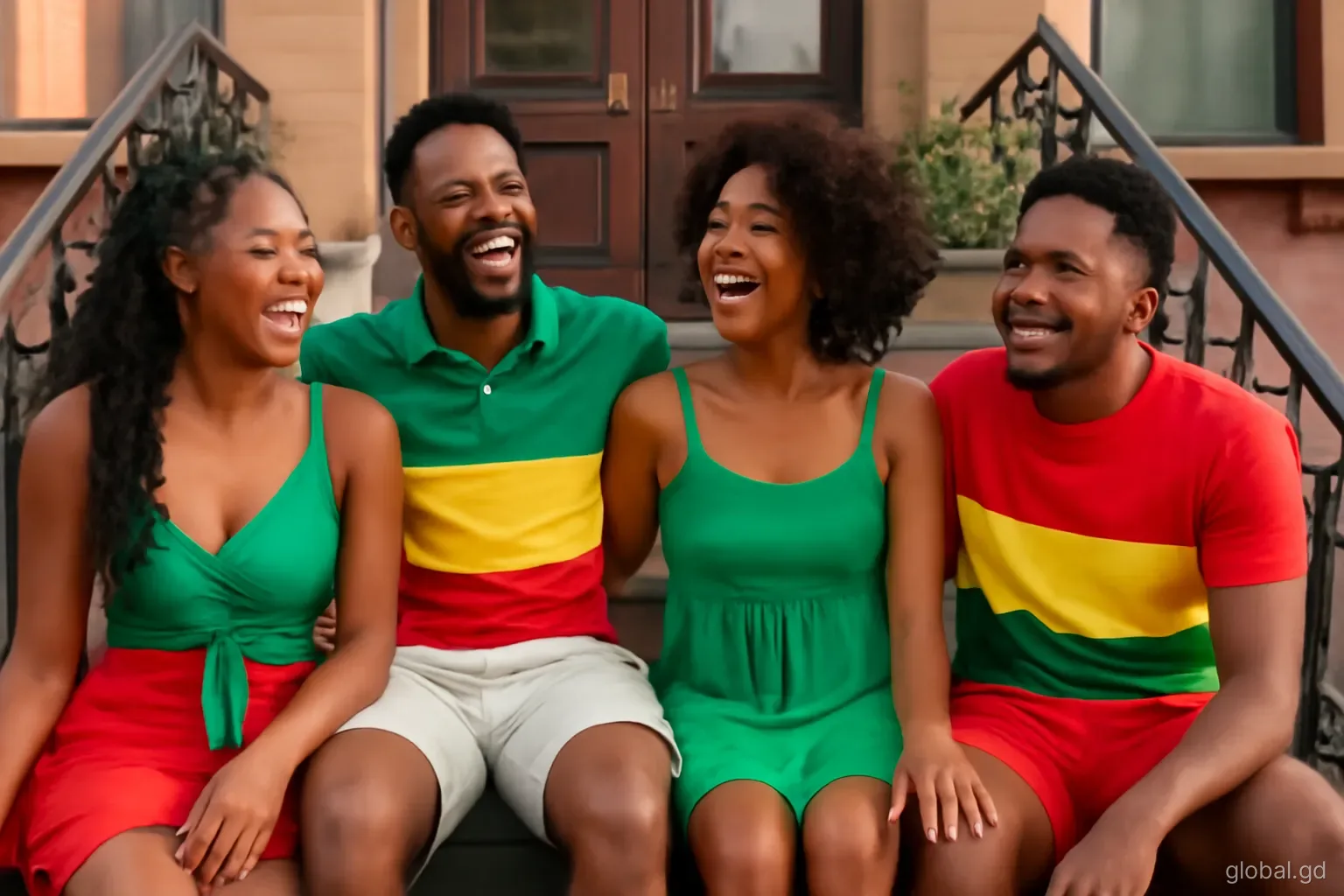
There are more people of Grenadian birth or descent living outside Grenada than there are on the islands themselves, by most estimates. With a home population of a little over one hundred thousand, Grenada has sent successive generations overseas for work, study and opportunity, and those communities now shape life back home through remittances, investment, family visits, politics and culture.
This profile looks at where the main Grenadian communities are, how each one formed, and what ties them to the islands today. Population figures for diasporas are notoriously hard to pin down, because censuses abroad count birthplace or self-described ancestry in different ways, so this piece avoids precise numbers and focuses on the patterns that are well established.
Why Grenadians left: the main waves of migration
Migration from Grenada is old. In the late nineteenth and early twentieth centuries, workers went to Trinidad, to the cane fields and later the oilfields, and to building projects across the region. Carriacou and Petite Martinique, with their seafaring traditions, sent men to sea and to work in Trinidad, and in the mid-twentieth century to the oil refineries of Aruba and Curaçao.
After the Second World War, Britain's labour shortage drew Grenadians to London, Birmingham and other English cities as part of what is now called the Windrush generation. From the 1960s onward, changes in North American immigration law opened the way to New York and to Canadian cities, above all Toronto and Montreal, and that became the largest flow.
Later departures followed political upheaval around 1979 to 1983, the economic shocks of the 1990s, and the destruction caused by Hurricane Ivan in 2004, which sent some families abroad while others came back to rebuild. Students continue to leave for university in the region, North America and Britain, and many stay on after graduating.
The main communities today
New York. Brooklyn, particularly the Flatbush, East Flatbush and Crown Heights area, has been the heart of Grenadian New York for decades, alongside neighbours from Trinidad, Jamaica, Haiti and the rest of the Caribbean. The West Indian American Day Carnival on Labour Day weekend along Eastern Parkway is a key gathering point, and Grenadian bands and food stalls are a fixture.
Toronto. Canada's largest city has a large, established Grenadian community, with many families arriving through the domestic worker schemes of the 1950s and 1960s and later through family reunification. Toronto's Caribbean Carnival each summer is a reunion of sorts, and the Greater Toronto Area is a frequent stop for Grenadian performers.
London and the English cities. Grenadians settled across London, including in boroughs such as Lambeth, Hackney and Brent, as well as in Birmingham, Leeds and elsewhere. The Notting Hill Carnival brings the community together each August, often in the same month as Spicemas at home.
Trinidad and Tobago. The closest and oldest link. Many Trinidadian families have Grenadian roots, and travel and trade between the two countries are constant. A fair share of Grenadians have relatives in Port of Spain, San Fernando or the surrounding towns.
Elsewhere. Smaller communities exist across the United States, including Florida and the north-eastern states, in other Caribbean islands, and in the Dutch Caribbean, where many Carriacouans worked in the twentieth century.
How the diaspora organises itself
Grenadian communities abroad tend to organise around four kinds of group. Hometown and parish associations bring together people from the same village or parish, so you will find groups linked to Gouyave, Grenville, Sauteurs or Carriacou that raise money for projects back home. School alumni associations connect former students of secondary schools such as the Grenada Boys' Secondary School, the Presentation Brothers' College, St Joseph's Convent and the Anglican High School, and they often fund scholarships, equipment and repairs.
Churches remain central. Many Grenadians abroad worship in Caribbean congregations that function as social networks as well as places of faith. Finally there are umbrella and cultural organisations that organise Independence Day celebrations around 7 February, dances, cricket matches and carnival bands, and that lobby on issues such as citizenship, voting and investment.
Grenada's diplomatic missions, including its high commissions and consulates in North America and Britain, are the official point of contact. The government has, under successive administrations, kept a diaspora affairs function within its ministries to engage with these groups.
What ties the diaspora to Grenada today
The connection is practical as much as emotional. The strongest threads are:
- Remittances. Money sent home is a significant source of household income in Grenada, paying for school fees, utility bills, medical care and house construction.
- Barrels and boxes. The tradition of packing barrels with food, clothes and household goods, especially before Christmas and the start of the school year, remains strong.
- Property. Many people abroad own family land or houses in Grenada, or are building a home to retire to, which keeps them engaged with lawyers, contractors and relatives on the ground.
- Homecoming. Spicemas in August, Christmas and Independence draw large numbers of visiting nationals, filling flights from New York, Toronto and London.
- Culture. Soca, calypso and Grenadian food travel with the diaspora, and artists from home tour cities with large communities.
- Return migration. A steady stream of retirees and mid-career professionals moves back, bringing savings, pensions and skills.
Tensions and open questions
The relationship is not always smooth. People abroad sometimes feel that their contributions are taken for granted, that they are charged too much in duties when they send goods home, or that they have little say in national affairs. Questions about overseas voting, the recognition of foreign qualifications and the treatment of returning residents come up repeatedly in diaspora meetings.
At home, some residents feel that visiting nationals arrive with outdated ideas of the country, or that money from abroad inflates land prices in places such as St George's, St David and the south coast. Family land shared between relatives at home and abroad is a common source of disputes.
There is also a generational shift. Children and grandchildren born in New York or Toronto may feel Grenadian, but their ties are weaker than their parents', and many have never lived on the islands. Whether they choose to claim citizenship, invest or visit will shape the next chapter of Grenada's relationship with its people abroad. Schools, churches and associations that make room for the second generation tend to stay strongest.
Practical barriers matter here as much as sentiment. Second-generation Grenadians who want to claim citizenship need their parent's Grenadian birth certificate, which may be held by a relative or need ordering from the Registry in St George's. Those who want to buy land may find that family land is tied up in unresolved estates. Making these steps easier, and explaining them clearly, is one of the most useful things that community organisations and the authorities can do.
What the diaspora means for the economy back home
Grenada's economy is small and open, built on tourism, the St George's University medical school, agriculture, construction and services. Within that picture the diaspora plays several roles that are easy to overlook. Remittances support household consumption and help families weather bad years, such as the period after Hurricane Ivan in 2004 or the tourism collapse during the pandemic. They also flow into construction, as families abroad finance houses that employ local masons, carpenters and electricians.
Visiting nationals are a distinct segment of the travel market. They stay with family more often than in hotels, but they rent cars, eat out, buy rum and spices, and spend heavily around carnival and Christmas. Airlines plan seasonal capacity from New York, Toronto and London partly around this demand.
Returning residents bring pensions earned abroad, which arrive steadily whatever happens to tourism. Many also bring professional experience in nursing, teaching, engineering, finance and the trades. The challenge, often discussed in policy circles, is turning goodwill into long-term investment: making it easier for people abroad to buy government securities, invest in local businesses or set up ventures without being worn down by slow processes. Anyone considering an investment from abroad should take independent advice from a licensed professional in Grenada.
Frequently asked questions
How many Grenadians live abroad?
Nobody has an exact figure. Foreign censuses count birthplace and ancestry differently, and many people have mixed Caribbean heritage. The commonly held view, supported by migration research, is that the number of Grenadian-born people and their descendants abroad is at least comparable to, and probably larger than, the home population.
Where is the largest Grenadian community outside the Caribbean?
New York, centred on Brooklyn, and Toronto are usually considered the two largest, followed by London and other English cities. Trinidad and Tobago has the oldest and closest links within the Caribbean, with many families having relatives in both countries.
Why do so many Carriacouans have links to Aruba and Curaçao?
In the twentieth century, men from Carriacou and Petite Martinique went to work in the oil refineries and shipping industries of the Dutch Caribbean. Some settled there and raised families, while others returned home with savings, which helped finance houses and boats on the smaller islands.
Can diaspora Grenadians vote in Grenadian elections from abroad?
Grenada does not currently have a system of overseas voting at foreign polling stations. Voter registration and voting take place in Grenada under the rules of the Parliamentary Elections Office. Check current registration requirements with that office before an election if you plan to travel home to vote.
How do you connect with Grenadians in your city?
Start with Grenada's nearest high commission, embassy or consulate, which keeps in touch with community organisations. School alumni groups, parish associations and Caribbean churches are also good entry points, and Independence Day events around 7 February bring many groups together.