Nutmeg is on Grenada's flag, in its national identity and in its export history. For much of the twentieth century, Grenada was one of the world's two leading nutmeg producers, alongside Indonesia, and the spice, together with mace, supported thousands of farming families in the parishes of St John's, St Mark's, St Andrew's and beyond. Then, in September 2004, Hurricane Ivan destroyed a large share of the island's nutmeg trees in a single day.
This article explains how the nutmeg and mace export trade is organised, from farmer to processing station to foreign buyer, why recovery after Ivan has been slow, and where the opportunities lie for exporters and investors. Figures on production and market share vary by source and year, so treat any numbers you see with care and check current data with the Grenada Cooperative Nutmeg Association or the Ministry of Agriculture.
Nutmeg and mace: two spices from one fruit
The nutmeg tree produces a fleshy, apricot-like fruit that splits open when ripe to reveal a shiny brown seed wrapped in a bright red, lacy covering. The seed, once dried and cracked out of its shell, is the nutmeg. The red covering, the aril, is mace, which is dried separately and turns orange-yellow. Mace is produced in much smaller quantities and typically commands a higher price per kilogram.
Nutmeg trees are either male or female, and only females bear fruit, so growers do not know the sex of seedlings for several years unless they use grafting or other propagation methods. Trees take several years to begin bearing and many more to reach full production. This long lead time is central to the story of recovery after the hurricane.
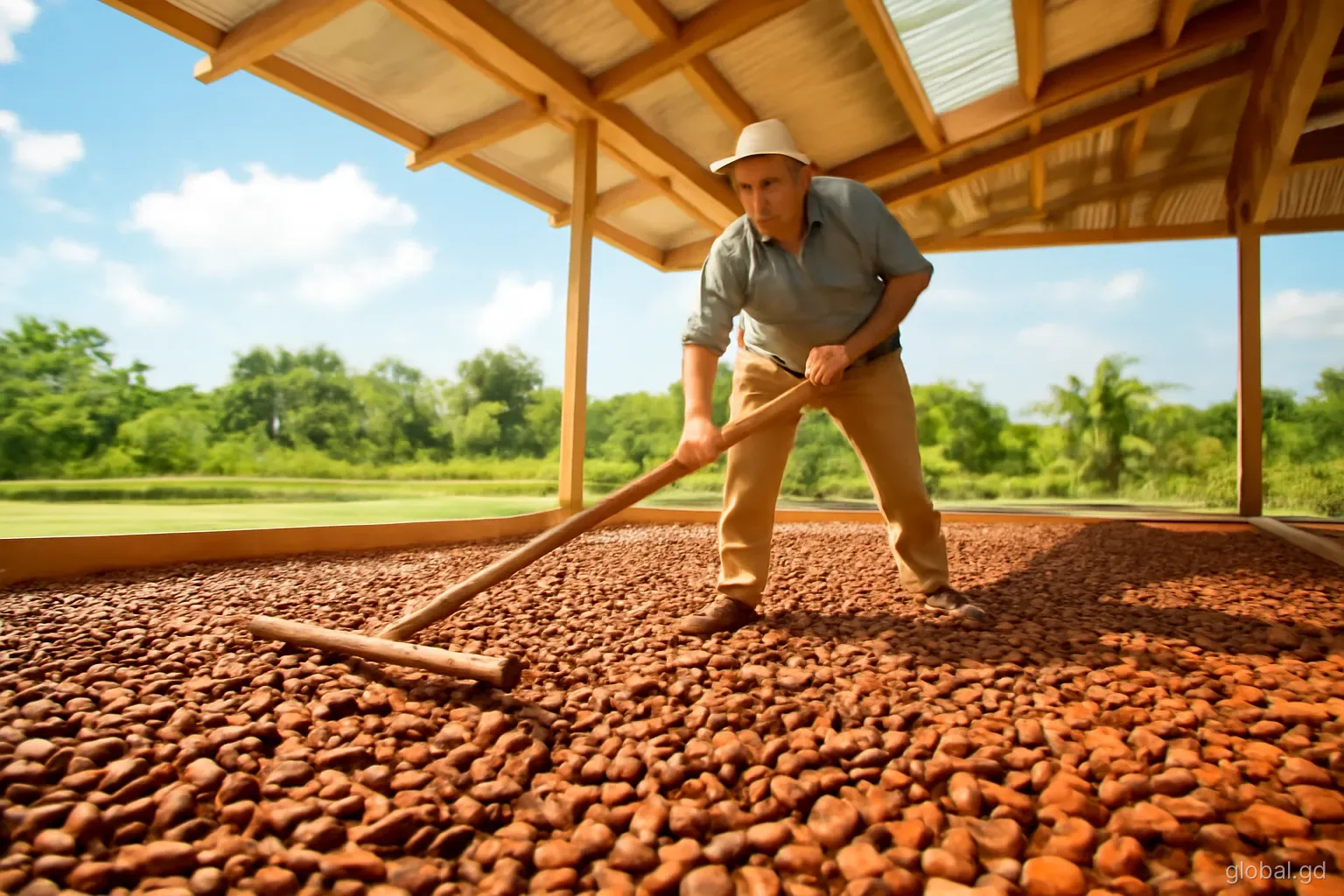
Farmers harvest fruit that has fallen naturally or been picked when split, then remove the mace and deliver the nutmeg in shell and the mace to receiving stations. The pericarp, the outer flesh, has traditionally gone to waste or been used locally in jams, syrups and liqueurs.
The role of the GCNA
A farmer-owned co-operative. The Grenada Cooperative Nutmeg Association, established in the 1940s under legislation, is owned by its farmer members and has long been the main channel for buying, processing and exporting Grenadian nutmeg and mace.
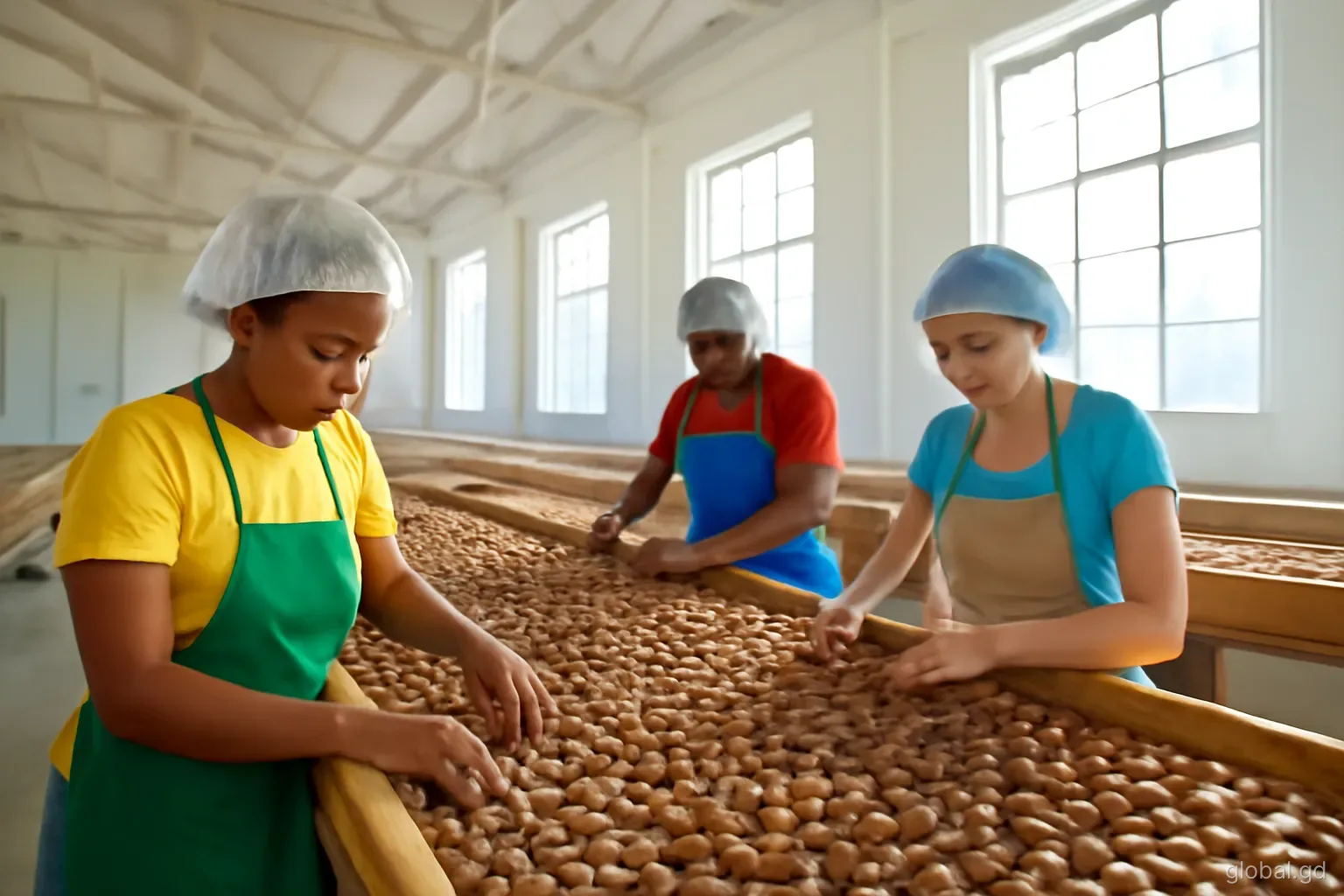
Receiving and processing. The association operates receiving stations around the island and processing stations, the best known being in Gouyave, St John's, where nutmegs are dried, cracked, sorted and graded by hand and by flotation, with sound nuts separated from defective ones.
Marketing. The GCNA negotiates sales with overseas buyers, traditionally including spice traders and processors in Europe and North America, and pays farmers an initial price on delivery, with any surplus distributed later according to the association's results.
Changing landscape. Over time, other processors and agro-businesses have also bought and used nutmeg for value-added products. Anyone interested in buying or exporting should check the current legal and commercial arrangements with the GCNA and the Ministry of Agriculture.
Grading and quality
Quality is what distinguishes Grenadian nutmeg in the market. After drying, nutmegs are cracked to remove the shell and sorted. A traditional test uses water: sound nutmegs sink, while defective or insect-damaged ones float. The defective nutmegs are not wasted; they are used for grinding or for the distillation of nutmeg oil, which has its own market in the flavour, fragrance and pharmaceutical industries.
Sound nutmegs are graded by size and condition, and mace is graded by colour, wholeness and cleanliness. Buyers pay premiums for consistent quality, careful drying and low moisture, which reduces the risk of mould and aflatoxin contamination, a growing concern in food safety regulation in importing markets such as the European Union.
Grenadian nutmeg has a reputation for a high essential oil content and good aroma, which supports its standing with buyers who care about flavour rather than lowest price. Maintaining that reputation depends on careful handling at every stage, from the farm to the warehouse.
Hurricane Ivan and the long recovery
Hurricane Ivan struck Grenada on 7 September 2004, followed by Hurricane Emily in July 2005. Ivan destroyed or badly damaged a very large share of the island's nutmeg trees, and production collapsed. Because new trees take years to bear and longer to reach full yield, recovery has been measured in decades rather than seasons.
Replanting was slowed by several factors: the age of many farmers, the difficulty of identifying female seedlings, the cost of land preparation, labour shortages, and competing demands on farmland. Some farmers moved to faster-yielding crops or left agriculture altogether. Meanwhile, Indonesia, India and other producers increased their presence in world markets.
Production has recovered partially, but Grenada no longer holds the share of the world market it once did. Recovery programmes have involved government, the GCNA and international partners, with seedling distribution and support for farmers. Hurricane Beryl in July 2024, while most severe in Carriacou and Petite Martinique, was a reminder of the risks that hurricanes pose to tree crops.
What overseas buyers ask for
Buyers of spices in Europe and North America, whether large importers, specialist spice houses or small gourmet brands, ask similar questions of any origin. They want to know the volume available each year and how reliably it can be supplied, the grade and size distribution, moisture content, and the results of laboratory tests for contaminants such as aflatoxins, pesticide residues and microbial load. Many also ask about traceability: which farms or areas the spice came from and how it was handled.
Documentation follows the goods. A typical export consignment of nutmeg or mace needs a commercial invoice, packing list, phytosanitary certificate issued by the Ministry of Agriculture's plant protection officers, a certificate of origin where a trade preference is claimed, and often a certificate of analysis. Buyers in the European Union and the United Kingdom apply their own food safety rules, while exporters to the United States must meet food facility registration and prior notice requirements.
Small exporters often find that the paperwork and testing costs weigh heavily on modest consignments. Working through an established exporter, or pooling volumes with other producers, can make the economics work. Exporters should confirm current requirements with the buyer and the relevant authorities before every new market.
Opportunities and challenges for exporters
For businesses and investors looking at nutmeg, the picture is mixed:
- Premium positioning. Grenada's name and quality reputation support premium niches such as gourmet, organic or single-origin spices, rather than competing on volume.
- Value-added products. Nutmeg oil, ground spices, nutmeg syrup, jams, sauces, cosmetics and pain-relief products made from nutmeg oil add value at home.
- Using the pericarp. The fruit's flesh, often wasted, can be turned into jams, juices, candies and liqueurs.
- Supply constraints. Limited volumes make it hard to supply large buyers consistently.
- Food safety standards. Export markets impose strict limits on contaminants, moisture and residues, requiring investment in drying, storage and testing.
- Climate risk. Hurricanes, drought and pests can disrupt supply, so buyers value producers with contingency plans.
Nutmeg tourism and the domestic market
Nutmeg also earns money through tourism. The processing station in Gouyave has long been a stop on island tours, where visitors watch workers sort and grade nutmegs and learn about the trade. Spice estates offer tours, and markets in St George's sell nutmeg, mace and spice baskets to visitors.
This domestic and tourist market matters to farmers and small processors, because it offers higher margins than bulk export. Products such as nutmeg jam, syrup and spice blends sold to visitors or in local supermarkets can provide a steady income alongside export sales.
For anyone considering investment in the sector, combining export sales with value-added products, tourism and local retail tends to spread risk. Before committing capital, speak to the GCNA, the Ministry of Agriculture and the Grenada Investment Development Corporation about the current state of production, supply arrangements and any incentives.
Frequently asked questions
Is Grenada still a major nutmeg producer?
Grenada remains an important and well-known producer, but its share of the world market fell sharply after Hurricane Ivan destroyed many trees in 2004. Indonesia and India are now larger producers. Grenada's strength lies in quality and reputation rather than volume.
What is the difference between nutmeg and mace?
Both come from the same fruit. Nutmeg is the dried seed inside a hard shell, while mace is the red, lacy covering around the seed, dried separately until it turns orange-yellow. Mace is produced in smaller quantities and usually sells at a higher price per kilogram.
What does the GCNA do?
The Grenada Cooperative Nutmeg Association is a farmer-owned co-operative that has long bought nutmeg and mace from farmers, processed and graded it at stations such as Gouyave, and exported it to overseas buyers. Members receive payment on delivery and may receive surplus payments later.
Why has nutmeg production recovered so slowly since Ivan?
Nutmeg trees take several years to begin bearing and longer to reach full production. Replanting was slowed by farmers' ages, labour shortages, costs and the difficulty of identifying female seedlings, and some farmers switched to other crops or left farming.
Can visitors see nutmeg processing in Grenada?
Yes. The nutmeg processing station in Gouyave, St John's, has long welcomed visitors to watch sorting and grading, usually for a small fee. Opening arrangements can change, so check locally or with your tour operator before going.