Most people who move to Grenada have to find somewhere to live while still abroad. The rental market is small, much of it never appears online, and photographs flatter properties that sit up rough roads or catch no breeze. Yet arriving with nothing arranged can be expensive, especially in the winter season when short-term rentals command premium rates.
The answer for most newcomers is a two-stage plan: a short-term base booked from abroad, followed by a long-term home chosen in person. This guide explains how to run that plan well, from choosing the right area to vetting listings remotely, and the questions that reveal a property's real character. It complements general advice on leases and rents by focusing on the search itself.
Decide the area before the house
Grenada is small, but daily life varies a great deal between areas, and the area matters more than any single property. Start with where you will spend your days. A job in St George's, at St. George's University in True Blue or at a marina in Lance aux Epines or Prickly Bay points to the south-west. A child in a particular school narrows options further, since school runs on congested roads at peak times can take far longer than the distance suggests.
The south-west peninsula, including Grand Anse, Morne Rouge, True Blue, Lance aux Epines, Calivigny and Westerhall, has the greatest concentration of rentals aimed at international tenants, along with supermarkets, restaurants and the airport. The hills behind, such as Morne Jaloux and St Paul's, offer cooler air and views. Further east and north, around St David, Grenville or Gouyave, rents are generally lower and life is more local, but commuting to the south-west adds time.
Consider also the rhythm of the medical school. Apartments near True Blue and Grand Anse fill with students at the start of each term, which affects availability and prices for everyone in those areas.
Match the home to the climate
Grenada's climate shapes which homes are comfortable. Properties on breezy hillsides or facing the trade winds from the east stay cooler and drier; those in sheltered hollows or surrounded by trees can feel humid and attract mould. Air conditioning is common in bedrooms but expensive to run all day, since electricity prices are high by international standards, so natural ventilation is worth more than it first appears.
Elevation helps. Even a modest climb above the coast lowers the temperature slightly and catches more breeze, though hillside homes may involve steep driveways and longer drives. Coastal properties offer sea views and swimming, but salt air corrodes appliances, cars and metal fittings faster.
Ask about water too. Many homes rely on a mix of mains supply and a cistern or tank, and in the dry season from roughly January to May some areas see interruptions. A property with good storage is more comfortable when the taps run dry.
Where to look while abroad
Agents. Several real estate agencies in Grenada manage long-term rentals as well as sales. A good agent will know which owners are reliable and can arrange viewings, but expect them to prioritise tenants ready to commit.
Online listings and social media. Property websites, classified sites and community groups carry many listings, often posted directly by owners. They are useful for gauging prices but require more checking.
Employers and institutions. Larger employers, the university and some international organisations keep housing lists or can recommend landlords. Ask early.
Word of mouth. Much of the market moves through personal networks. Introductions from colleagues, friends or professional contacts on the island are among the most reliable leads.
Holiday rental platforms. Owners of holiday properties sometimes accept long stays in the low season. These are good for a temporary base and occasionally become long-term homes.
Running a remote viewing that tells you something
Photographs are chosen to sell. A live video viewing, done well, reveals much more. Ask the agent or owner to follow a sequence like this:
- Start outside: show the approach road, the gradient of the driveway and where a car would park.
- Walk the outside of the building: roof edges, gutters, water tanks or cistern, any signs of damp or cracking.
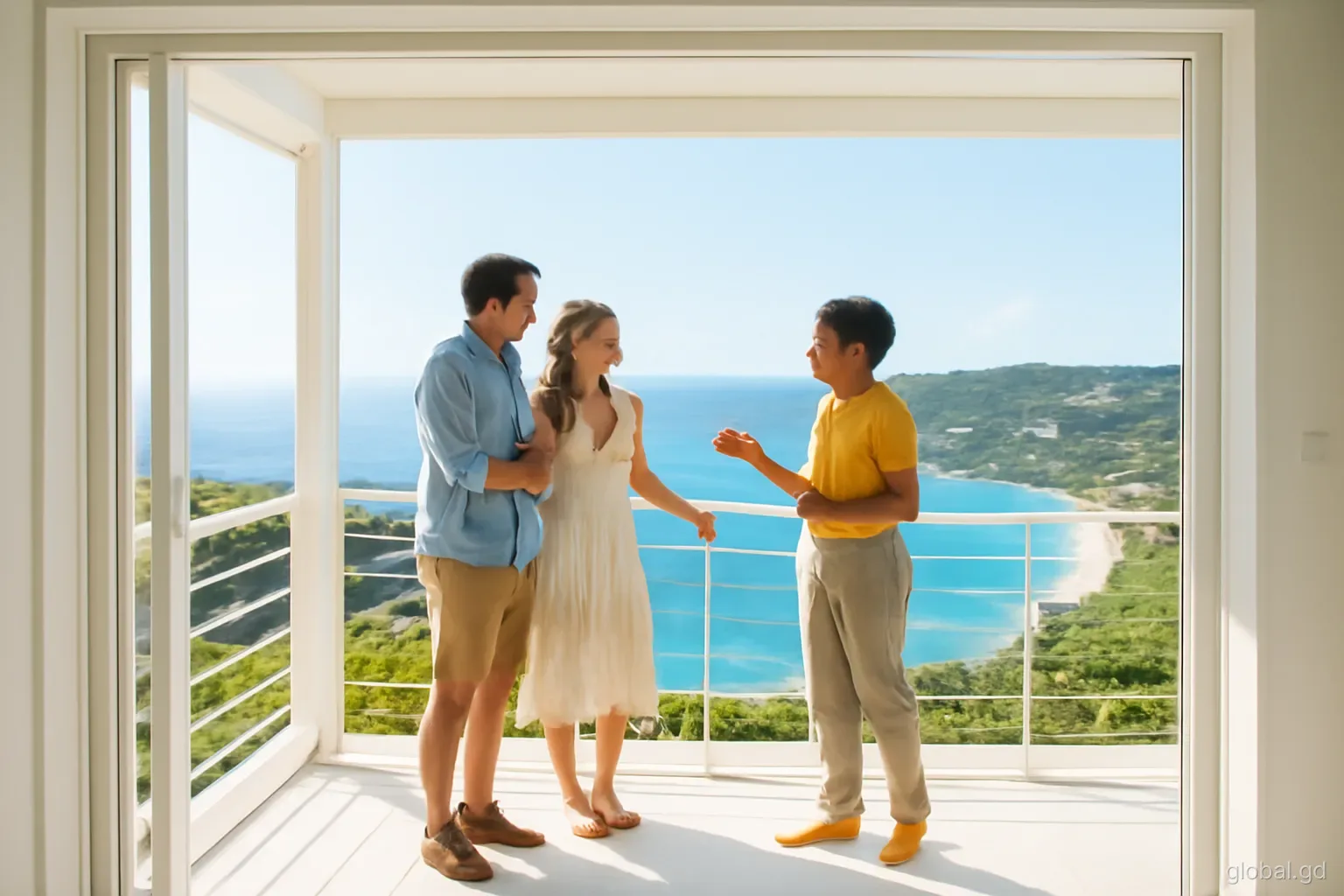
- Open windows and doors to show the breeze and the view in each direction, including neighbouring buildings.
- Show every room, including bathrooms, kitchen cupboards and under sinks, looking for mould or leaks.
- Turn on taps and the shower to check water pressure and hot water.
- Point out the electricity meter, the main switch and any backup water or power arrangements.
- Ask about security features: grilles, lighting, gates and whether neighbours are close.
- Finish with a slow pan of the street at the time of day you would normally be home, to hear the noise level.
The case for a short-term base
Even with good remote research, committing to a year-long lease without standing in the property is a risk. A furnished short-term rental for the first month or two lets you learn the roads, test commute times, meet landlords and view several options in person. It also gives time for a shipment to arrive and clear customs.
The cost of a short-term base varies with the season. Winter months bring the highest rates, while late spring and summer are more favourable. Booking a temporary base in the area you are leaning towards allows you to test it directly before committing.
Use the temporary period actively. Drive the routes to work and school at rush hour, visit at night, walk to the nearest shop and listen for dogs, roosters and music, all of which are part of daily life in many neighbourhoods.
What to ask a landlord before committing
Questions about practicalities reveal more about a property than its description. Before signing, get clear answers on:
- Which utilities are included, and how electricity, water and internet are billed.
- Whether the property has a cistern or water tank for times when the mains supply is interrupted.
- Who handles maintenance and repairs, and how quickly problems are fixed.
- What happens before and after a hurricane: shutters, preparation, damage responsibility and rent if the property becomes uninhabitable.
- Whether pets are allowed, if relevant, and any conditions.
- The deposit amount, how it is held and the conditions for its return.
- Which internet providers serve the address and what speeds are realistic.
- Whether the owner is resident nearby, overseas or represented by an agent.
Red flags in remote searching
Rental fraud exists everywhere, and remote searchers are the easiest targets. Be wary of:
- Requests for payment before any viewing. Never send a deposit for a property no one has inspected for you.
- Prices well below the market. An apartment in a sought-after area at a fraction of comparable rents is a warning.
- Owners who cannot arrange a live video call. Ask for a live walk-through, not pre-recorded footage.
- Pressure to decide immediately. Genuine landlords understand that tenants need time.
- Payment to personal accounts abroad. Prefer paying a registered agent or a local account in the owner's verifiable name.
- Listings copied from elsewhere. A reverse image search sometimes shows the same photographs advertised under another name or on another island.
- No written lease. A landlord unwilling to put terms in writing is unlikely to honour them later.
Budgeting for the move-in month
The first month in a new rental tends to cost more than newcomers expect. A security deposit, often equivalent to one month's rent, is usually paid alongside the first month in advance, and some landlords ask for more for furnished or high-end properties. Utility accounts may require deposits too, particularly electricity, where an account in the tenant's name may need a deposit with the supplier.
Then come the small but necessary purchases: fans if air conditioning is limited, a dehumidifier or moisture absorbers for cupboards, mosquito screens if windows lack them, basic hurricane supplies, and kitchen items not included in a furnished let. Unfurnished homes in Grenada can be very bare, sometimes without appliances, so check exactly what is included before comparing rents.
Rents are commonly quoted in either US or Eastern Caribbean dollars. Confirm which, and how payment is made, before signing. The fixed peg of EC$2.70 to US$1 makes conversion simple, but bank transfer costs from abroad add up over a year.
Frequently asked questions
Should a home in Grenada be rented before arriving?
Booking a short-term base before arrival is sensible, but committing to a long lease unseen is risky. Most newcomers rent a furnished place for one or two months, then view long-term options in person. This also allows time for shipped belongings to arrive and clear customs.
Which areas do international newcomers usually choose?
Many settle on the south-west peninsula, including Grand Anse, Morne Rouge, True Blue, Lance aux Epines, Calivigny and Westerhall, close to shops, schools, marinas and the airport. Hillside areas such as Morne Jaloux and St Paul's offer cooler air. Rural parishes suit those wanting quieter, more local life.
How do rentals near St. George's University affect the market?
Thousands of students need housing near True Blue and Grand Anse, so availability tightens and prices firm up around the university's term starts. Families and professionals looking in those areas should search early, or consider neighbouring areas less dominated by student lets.
How can rental scams be avoided from abroad?
Insist on a live video viewing, use a recommended agent or verified owner, never pay before the property has been seen by you or someone you trust, and be suspicious of prices far below the market. Pay through traceable channels and get a written lease.
Is a car needed to view rentals in Grenada?
It helps a great deal. Many properties lie up side roads that buses do not serve, and viewing several in one day is far easier by car. Hiring a car during the temporary stay also lets you test commute routes at the times you would actually travel.