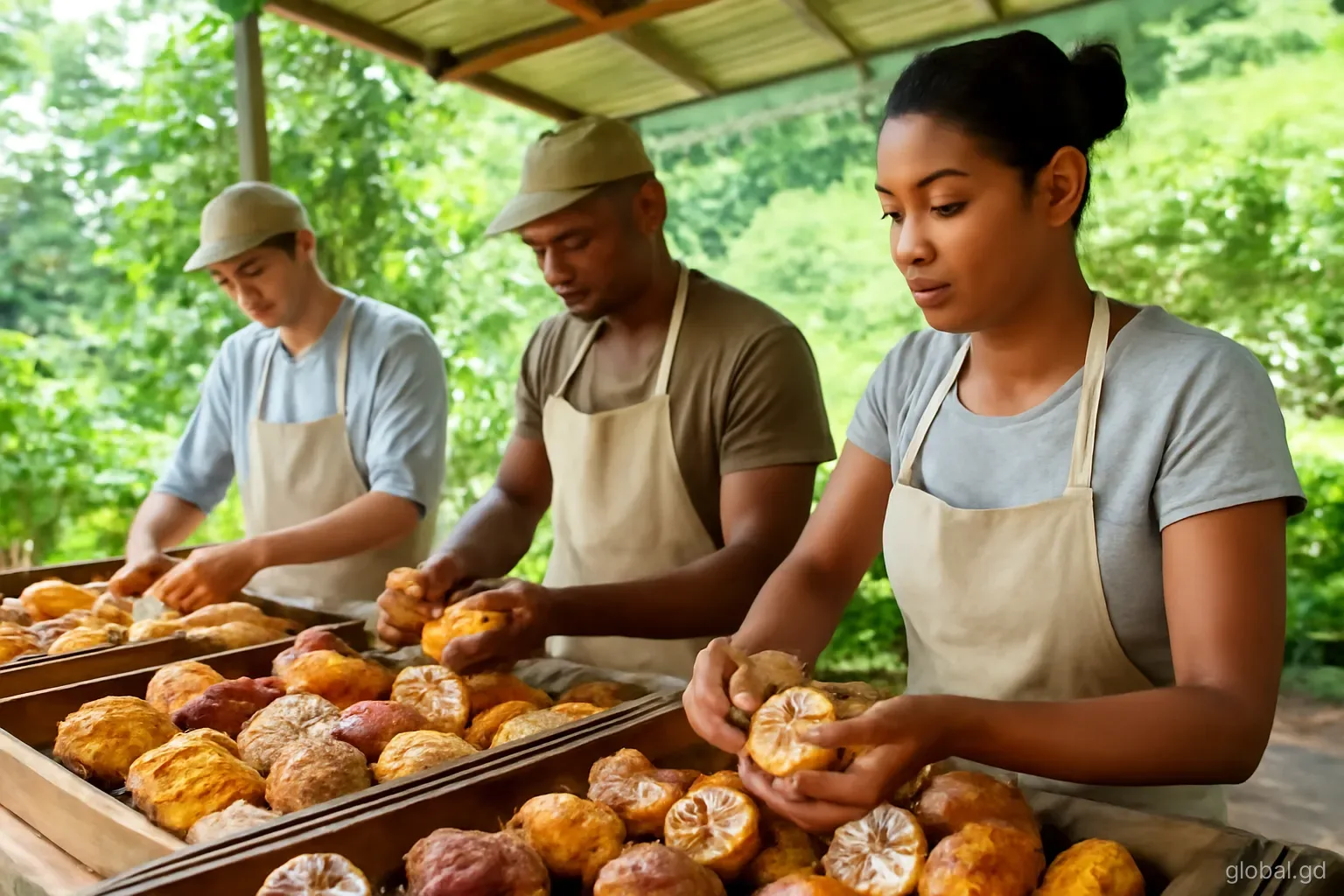
Grenada is known as the Spice Isle for good reason. Nutmeg and mace remain its signature crops, alongside cocoa, cinnamon, clove, bay leaf, turmeric and a wide range of fruit and vegetables. For decades the country exported most of these as raw commodities, which left it exposed to world prices and kept the value of processing elsewhere. Successive governments have named agro-processing as a priority because it keeps more of that value at home.
For an investor, the opportunity is less about growing more nutmeg and more about what happens after harvest: drying, grading, processing, packaging, branding and selling to buyers who pay for origin and quality. The constraints are real too: fragmented land, ageing farmers, crop theft, disease, high energy costs and small volumes. This article looks at both sides and at the institutions an agribusiness investor will deal with.
The crops and how they are organised
Nutmeg is marketed largely through the Grenada Cooperative Nutmeg Association (GCNA), a long-established cooperative that buys from farmers, processes nutmeg and mace at receiving and processing stations and sells abroad. Hurricane Ivan in 2004 destroyed a large share of nutmeg trees, and because new trees take years to bear, production has taken a long time to recover.
Cocoa has historically been marketed through the Grenada Cocoa Association, though private buyers and estate-based chocolate makers have become more prominent. Grenada's fine-flavour cocoa has an international reputation, and the island has a small but well-known bean-to-bar chocolate industry built around estates in St Patrick and St Mark, such as Belmont Estate.
Fruit, vegetables, root crops and livestock serve the domestic market, hotels and, increasingly, regional trade. Fisheries, centred on landing sites such as Gouyave, Grenville and the fish market in Melville Street, St George's, supply local demand and some exports of tuna and other species. Each of these chains has its own players, regulations and points where an investor can add value.
Where value can be added
Spice processing and packaging. Ground spices, blends, essential oils, oleoresins and retail packs can command higher prices than bulk exports, especially with traceable origin.
Chocolate and cocoa products. Fine-flavour beans support premium chocolate, cocoa nibs and cocoa-based cosmetics. The challenge is consistent fermentation and drying, and access to export markets.
Fruit processing. Juices, purées, jams, sauces and dried fruit can absorb seasonal gluts of mango, soursop, golden apple and others that would otherwise go to waste.
Hotel supply chains. Hotels import a large proportion of their food. Reliable local supply of consistent quality, from salad greens to eggs and processed foods, is a long-standing gap.
Fish processing and cold chain. Better handling, ice, cold storage and processing can lift the value of the local catch, though export to markets such as the United States and the European Union requires meeting strict food safety standards.
Agri-tourism. Estate tours, tastings and farm stays link agriculture with tourism and bring cash directly to farms.
Land, labour and the realities on the ground
Agricultural land in Grenada is often held in small parcels, and much of it is family land with multiple heirs and unclear title. Assembling a block of land large enough for commercial farming takes time and careful legal work. Foreign investors need an alien landholding licence to hold land, and leasing from Grenadian owners or partnering with established farmers is often more practical than buying.
Farm labour is harder to find than it used to be, as younger Grenadians move into tourism, services or migration. Mechanisation is limited on steep hillsides. Wages, National Insurance and the availability of reliable workers need to be built into any plan.
Praedial larceny, the theft of crops and livestock, is a persistent problem raised by farmers across the island. Security, community relations and the choice of crops all affect how much is lost. Disease and pests matter too: citrus greening affected citrus production, and plant health rules restrict what can be imported. The Ministry of Agriculture's extension and plant protection services are the first port of call.
Selling into the visitor and regional markets
Before chasing distant export markets, many Grenadian producers build sales at home. Visitors buy spices, chocolate, rum cakes, sauces and cosmetics as gifts at the airport, the cruise terminal, the spice market in St George's and hotel shops. That trade rewards attractive, durable packaging and clear labelling of origin, and it pays in cash with short credit terms.
Regional markets offer the next step. Grenada's membership of CARICOM and the OECS gives goods that meet the rules of origin preferential access to neighbouring islands, and the shared currency within the Eastern Caribbean removes exchange risk on sales to St Lucia, St Vincent, Antigua and others. Shipping between islands is irregular for small consignments, so consolidating with other exporters can help.
Hotels are a third channel, but they buy on reliability. A supplier who misses deliveries in the busy season is quickly replaced by an importer, so start with volumes you are sure you can meet.
Pitfalls to check before investing
Agribusiness projects in small islands fail for predictable reasons. Before committing capital, test each of these:
- Supply security: can enough raw material of consistent quality be sourced year after year, and at what price relative to the GCNA or other buyers?
- Certification: does the target market require food safety certification, organic status or specific labelling that the facility must achieve before selling?
- Energy: processing, drying and cold storage use a lot of electricity; model it at real local tariffs and consider solar early.
- Water: dry season shortages can affect both farming and processing.
- Export logistics: shipping schedules, container sizes, freight costs and transit times to the target market.
- Market access: who will buy, in what volumes and on what terms; a letter of interest is not a contract.
- Regulation: standards for food processing set by the Grenada Bureau of Standards and health authorities, and export documentation through the relevant ministry.
Support, partners and finance
The Ministry of Agriculture runs extension services, plant protection and quarantine and has promoted agro-processing in its plans. The Grenada Investment Development Corporation handles investment facilitation and incentive applications, and the Grenada Development Bank has a mandate to lend to productive sectors including agriculture. Regional bodies such as the Caribbean Agricultural Research and Development Institute provide technical expertise, and international development partners have funded value-chain projects over the years.
Partnering with existing farmers' groups, cooperatives or estates often makes more sense than going alone. They bring land, local knowledge and relationships, while the investor brings capital, processing know-how and market access. Agreements should be written clearly, covering supply volumes, quality standards, pricing and dispute resolution.
Tax treatment of agricultural income, any concessions on equipment and the rules on land holding are matters for professional advice. Confirm the current position with a licensed Grenadian attorney and accountant.
Building a project that lasts
The agribusinesses that last in Grenada usually start smaller than their founders first planned, prove a product and a buyer, and then scale. A small processing unit making a well-branded spice blend or chocolate bar for local, visitor and regional markets can build a track record before taking on export contracts that demand volumes the island may struggle to supply.
Telling the origin story honestly matters in premium markets: buyers want to know which estate, which parish and which farmers. Paying farmers fairly and on time builds the supply loyalty that every processor depends on. Finally, plan for hurricanes: diversify crops, insure buildings and equipment, and keep enough stock and cash to survive a bad season.
Keep records from the start. Lenders, certification bodies and export buyers all ask for production data, quality tests, traceability and financial statements, and a project that can show several seasons of clean records finds finance and customers far more easily than one that cannot.
Frequently asked questions
Who buys nutmeg from Grenadian farmers?
The Grenada Cooperative Nutmeg Association has long been the main buyer and exporter of nutmeg and mace. It purchases from farmers through receiving stations and processes and markets the crop abroad. Private buyers may operate depending on current regulations.
Can a foreigner buy farmland in Grenada?
Yes, with an alien landholding licence, which is required for non-citizens to hold land. Leasing land from Grenadian owners or partnering with established farmers is a common alternative that avoids the cost of buying.
What is praedial larceny?
It is the theft of agricultural produce and livestock from farms. Farmers across Grenada cite it as a major problem that discourages investment. Security measures, community relationships and support from the police and farm authorities help reduce losses.
Is Grenadian cocoa in demand abroad?
Grenadian fine-flavour cocoa has a strong reputation among specialist chocolate makers. Demand depends on consistent quality from fermentation and drying, reliable volumes and certification where buyers require it.
Which agencies regulate food processing in Grenada?
Food processing involves the Grenada Bureau of Standards, environmental health officers and the Ministry of Agriculture, with export documentation depending on the product and destination. Confirm current requirements with each body before investing in equipment.