On its own, Grenada is a small market. As part of regional groupings it is a gateway to a much larger one. Grenada belongs to the Caribbean Community (CARICOM), whose Single Market and Economy aims to allow goods, services, capital and certain people to move freely among member states. It is also a member of the Organisation of Eastern Caribbean States (OECS), with a deeper economic union among its full members, and of the Eastern Caribbean Currency Union, which shares the EC dollar and a central bank.
For a business, these memberships can turn a Grenadian company into a regional platform. The reality is more uneven than the treaties suggest: some rights work well, others depend on national procedures that vary from island to island. This article explains what a company based in Grenada can realistically gain, where the limits are, and how to test a regional plan. Treaty rights and their national implementation change, so confirm specifics with legal advisers in each target country.
Three overlapping memberships
CARICOM has fifteen full members across the Caribbean, from Jamaica and Trinidad and Tobago to Belize and Suriname. The Revised Treaty of Chaguaramas established the CARICOM Single Market and Economy (CSME), which provides for free trade in goods originating in the region, a common external tariff on imports from outside, rights to provide services and establish businesses in other member states, free movement of capital and free movement of certain categories of skilled nationals.
The OECS groups the smaller Eastern Caribbean states. Under the Revised Treaty of Basseterre, its full members, including Grenada, St Lucia, St Vincent and the Grenadines, Dominica, Antigua and Barbuda, and St Kitts and Nevis, form an economic union intended to create a single financial and economic space, with free movement of their citizens among them.
The Eastern Caribbean Currency Union shares the EC dollar, issued by the Eastern Caribbean Central Bank, among six independent states and the British territories of Anguilla and Montserrat. A company in Grenada can sell to customers across the union without currency conversion or exchange risk.
What a Grenadian company can gain
Duty-free trade in regional goods. Goods that meet CARICOM rules of origin can generally move between member states free of import duty, though other charges and standards still apply.
Right of establishment. CARICOM nationals and companies have treaty rights to establish businesses in other member states on terms no less favourable than locals, subject to national procedures and certain exceptions.
Services across borders. Professionals and service firms have rights to provide services regionally, although professional recognition and licensing remain national.
A single currency for eight territories. Pricing, invoicing and banking in EC dollars across the Eastern Caribbean simplifies regional sales.
Regional capital markets. The Eastern Caribbean Securities Exchange and the Regional Government Securities Market provide channels for raising and investing capital across the currency union.
Movement of skilled staff. Certain categories of CARICOM nationals can work in other member states under skills certificates, and OECS full-member citizens enjoy wider free movement, easing regional staffing.
Who counts as a regional company
Treaty rights generally apply to nationals of member states and to companies that qualify as community companies, which broadly means companies formed under the law of a member state and substantially owned and controlled by community nationals. A Grenadian company owned entirely by investors from outside the region may therefore not enjoy every CSME right, even though it is incorporated in Grenada.
Investors who obtained Grenadian citizenship through the citizenship by investment programme are Grenadian nationals in law, but the extent to which other member states extend regional rights to investor citizens has been debated, and practice may vary. Do not assume that citizenship by investment carries every regional right in every member state without checking.
For goods, what matters is the origin of the product rather than the nationality of the owner. A product must meet the rules of origin, usually through sufficient processing or local content in the region, to qualify for duty-free treatment. Simply repackaging imported goods in Grenada will not normally confer origin.
Where the limits show
Implementation of the CSME has been uneven. Member states have reserved certain sectors, maintained licensing requirements, and kept administrative procedures that can make establishing a business elsewhere slow. Land ownership by non-nationals, including nationals of other CARICOM states, generally still requires a licence in each country, just as Grenada requires an alien landholding licence.
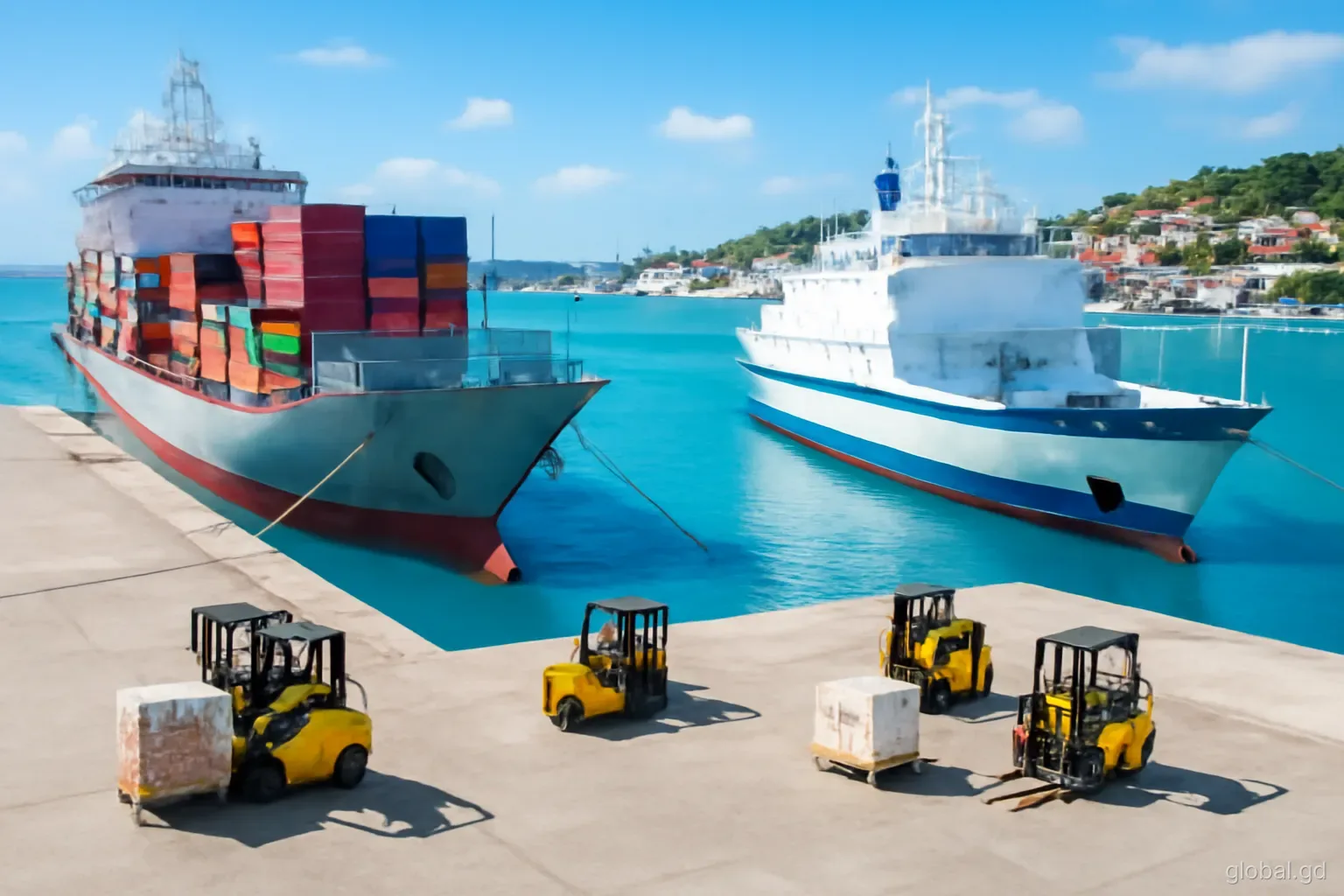
Logistics are a practical barrier. Shipping between Eastern Caribbean islands is often irregular and expensive for small consignments, and air cargo capacity is limited. A business planning to serve several islands from Grenada should test actual freight schedules and costs, not just tariff rates.
Standards and labelling requirements, sanitary and phytosanitary rules for food and agricultural goods, and differences in VAT and excise between islands also affect regional trade. Each market has its own regulators, distributors and consumer preferences.
Finally, services such as law, medicine and engineering remain subject to national registration. A professional qualified in Grenada may still need to register in each country where they practise.
Taxes when operating across islands
Regional operation raises tax questions that should be settled before trading begins:
- Permanent establishment: carrying on business through a fixed place or agent in another member state may create a taxable presence there.
- The CARICOM double taxation agreement: most member states, including Grenada, have signed an intra-regional agreement that allocates taxing rights and can relieve double taxation for income earned across the region.
- Withholding taxes: payments of dividends, interest, royalties and fees between companies in different islands may attract withholding tax, sometimes reduced by the regional agreement.
- VAT and excise: each country runs its own VAT system, with different rates and registration thresholds.
- Transfer pricing: charges between related companies in different islands should reflect what independent parties would agree.
- Customs: rules of origin documentation must accompany goods claiming regional duty-free treatment.
Where Grenada's position helps and where it does not
Grenada sits at the southern end of the Eastern Caribbean chain, close to Trinidad and Tobago and within reach of St Vincent and the Grenadines and Barbados. That location favours businesses linking the southern Caribbean: yacht services that serve boats cruising between Trinidad and the Grenadines, distributors bringing goods from Trinidad's manufacturing base, and service firms working across the southern islands.
St George's University gives Grenada an unusual international population and an education-services cluster that regional businesses can serve. The island's direct flights to North America and the United Kingdom make it reasonably accessible for executives travelling to and from the region.
On the other hand, larger regional hubs such as Trinidad, Barbados and Jamaica have bigger markets, deeper financial sectors and more frequent shipping. A company whose main market is the whole of CARICOM may find one of those a more natural base, with Grenada better suited to businesses focused on the Eastern Caribbean or to those whose owners want to live on the island.
Testing a regional plan
Before building a business case on regional reach, test it methodically:
- Identify the specific islands you will sell to first, rather than the whole region at once.
- Check whether your products meet rules of origin, and what documentation is needed at each border.
- Get real freight quotes and schedules from Grenada to each target market.
- Confirm licensing, registration and standards requirements in each country with local advisers.
- Decide whether to sell through distributors, agents or your own branch or subsidiary in each market.
- Take tax advice on permanent establishment, withholding taxes and the regional double taxation agreement.
- Start with one or two markets, learn, and expand once the model works.
- Review results after a full year, comparing actual freight, compliance and sales costs in each island against the plan before committing to the next market.
Frequently asked questions
Can a Grenadian company export duty-free to other CARICOM countries?
Goods that meet CARICOM rules of origin can generally be traded free of import duty among member states. The product, not the company's ownership, must qualify, and the right documentation must accompany shipments. Other charges and standards still apply.
Does the OECS allow Grenadian businesses to operate freely in St Lucia or St Vincent?
The OECS economic union aims for a single economic space, and citizens of full members can move freely. Businesses still need to register, obtain licences and comply with tax rules in each country where they operate.
Is the EC dollar used across the region?
The EC dollar is the currency of the Eastern Caribbean Currency Union: six independent states and two British territories. Other CARICOM countries, such as Barbados, Jamaica and Trinidad and Tobago, have their own currencies.
Do investor citizens get CSME rights?
Citizens by investment are Grenadian nationals in law, but how other member states apply regional rights to them has been debated and practice may vary. Check with advisers in the target country before relying on CSME rights.
Does Grenada have a tax treaty with other Caribbean countries?
Most CARICOM members, including Grenada, have signed an intra-regional double taxation agreement covering income earned across member states. Its application to a particular business should be confirmed with a licensed tax adviser.